News & Views · Nature Chemical Biology
Two loops opened a new search for binding peptides
A retrospective looks back at a 2009 experiment that made it possible to search large collections of peptides held in two loops.
Source published
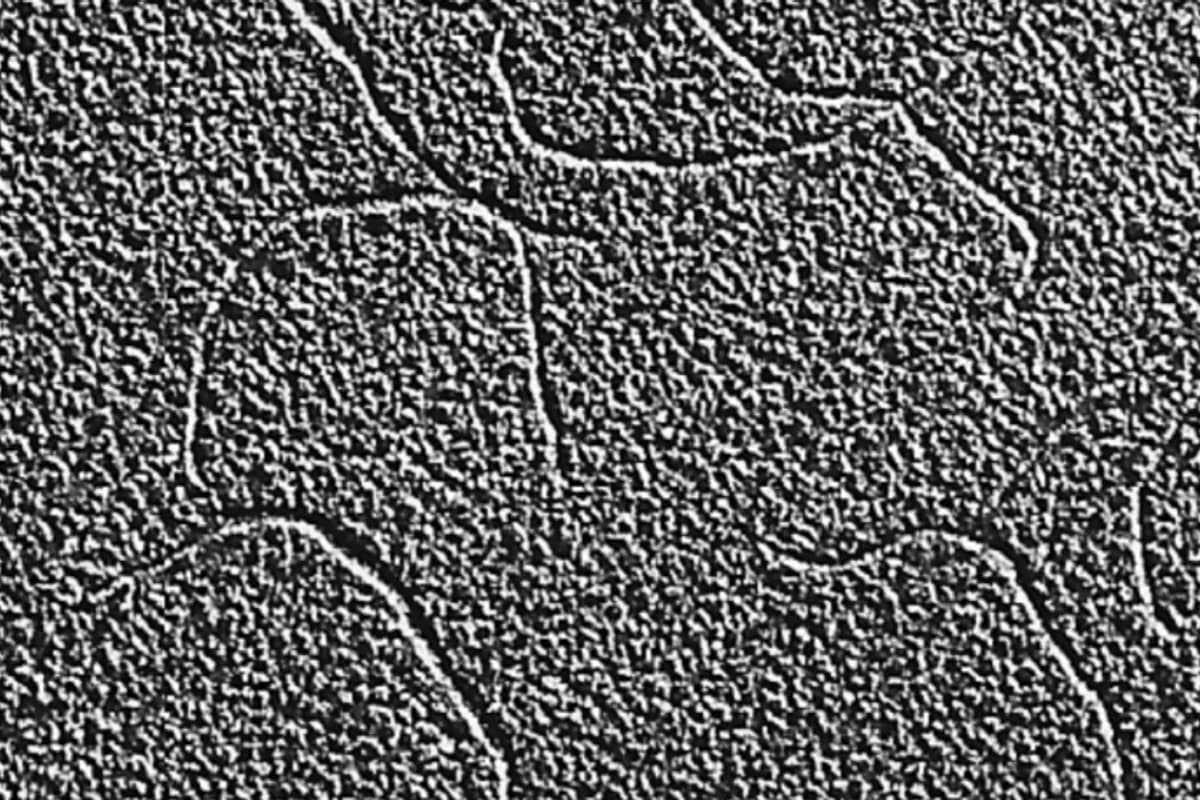
Filamentous fd bacteriophages on an electron microscope grid, photographed in 1962. Viruses of this shape are used in phage display.
Credit Androidpar · CC BY-SA 4.0 · Cropped and converted to WebP


A flexible peptide chain can adopt many shapes. Fasten parts of it together and its amino acids face a binding partner in a more restricted arrangement. A bicyclic peptide contains two such loops, giving chemists another way to vary the shape of a small molecule.
Xu-Dong Kong and Changlin Tian revisit an early study that paired this chemistry with phage display. Each displayed peptide remained associated with genetic information that identified it. Researchers could therefore select a promising binder from a mixture and recover its identity, making even unfamiliar two-loop structures practical to investigate.