News & Views · Nature Machine Intelligence
Which peptides will build a material together?
A commentary examines how a compact neural network can help researchers choose peptide sequences worth testing for self-assembly.
Source published
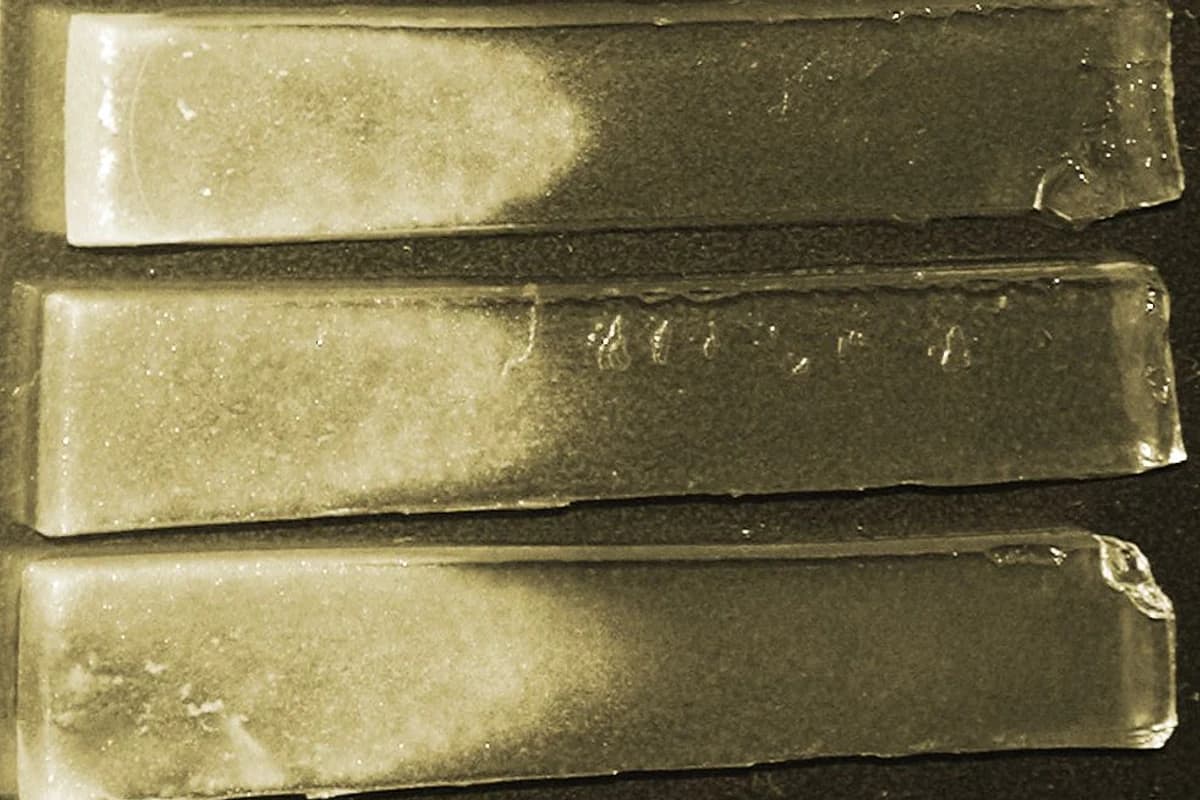
Hydrogel scaffolds prepared at NIST show how the stiffness of a material can affect mineral deposition by bone cells.
Credit Chatterjee / National Institute of Standards and Technology · Public domain · Cropped and converted to WebP


Some short peptides organise into larger structures when many copies come together. Finding them is a materials problem as much as a molecular one. Changing a sequence can change how neighbouring molecules pack, even when the individual peptides look similar.
Tianang Leng and Cesar de la Fuente-Nunez discuss a model that combines sequence information with physical properties to pick candidates for experiments. The underlying study compared predictions with laboratory observations. That comparison matters because predicting a tendency to assemble and establishing that a particular material has formed are separate tasks.