News & Views · Nature Chemical Biology
A clue to why neighbouring cells undergo ferroptosis
A sugar-binding protein helps explain how this iron-dependent form of cell death can affect adjacent cells.
Source published
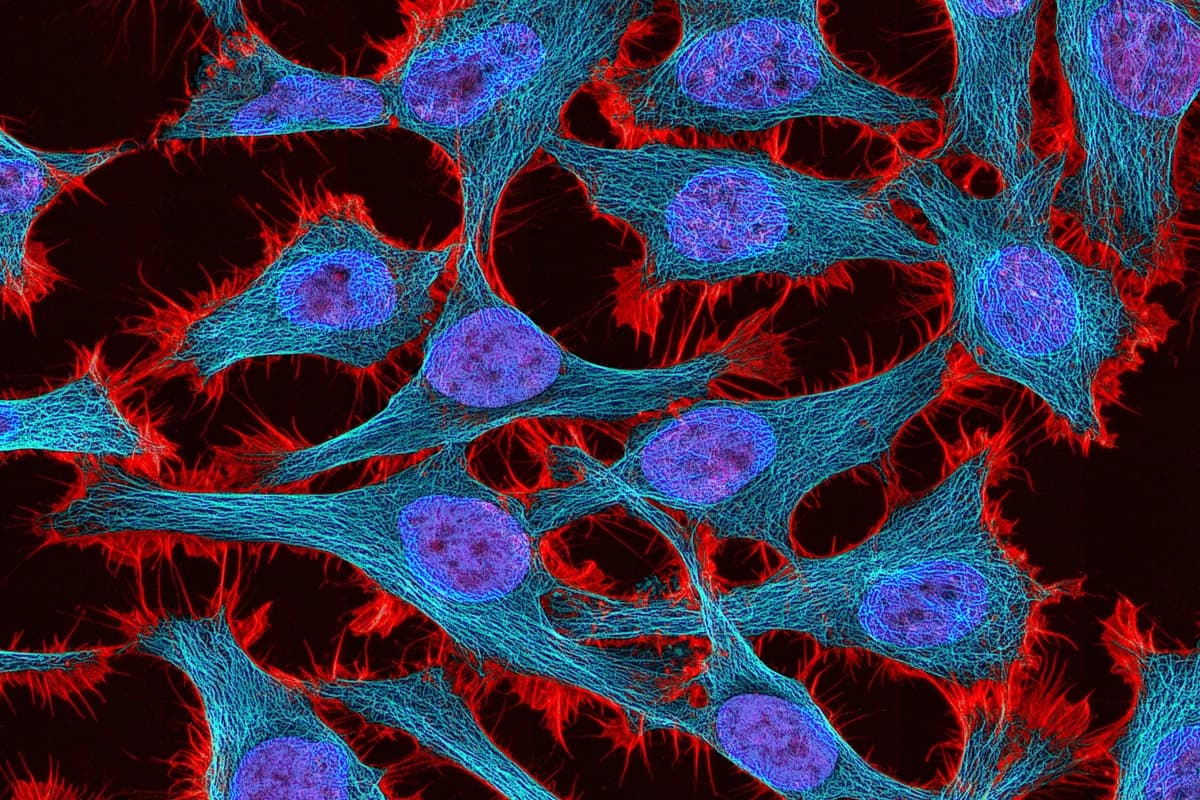
A fluorescence micrograph of HeLa cells shows the actin fibres, microtubules and nuclei of neighbouring cells.
Credit National Institutes of Health · Public domain · Cropped and converted to WebP


Ferroptosis involves oxidative damage to cell membranes. Yet observing one cell die does not explain why the same process sometimes appears in the next cell. The question draws attention to molecules that can travel between neighbours.
In their Nature Chemical Biology commentary, Tiantian Sun and colleagues discuss evidence implicating galectin-13, a protein released by cells. The work connects this protein both to the spread of ferroptosis and to differences in how susceptible cancer cells are to it.