News & Views · Nature Chemical Biology
How a peptide tail ends up inside its own ring
Lasso peptides owe their shape to a tail threaded through a molecular ring. Research into the enzymes that make them offers clues to how that arrangement arises.
Source published
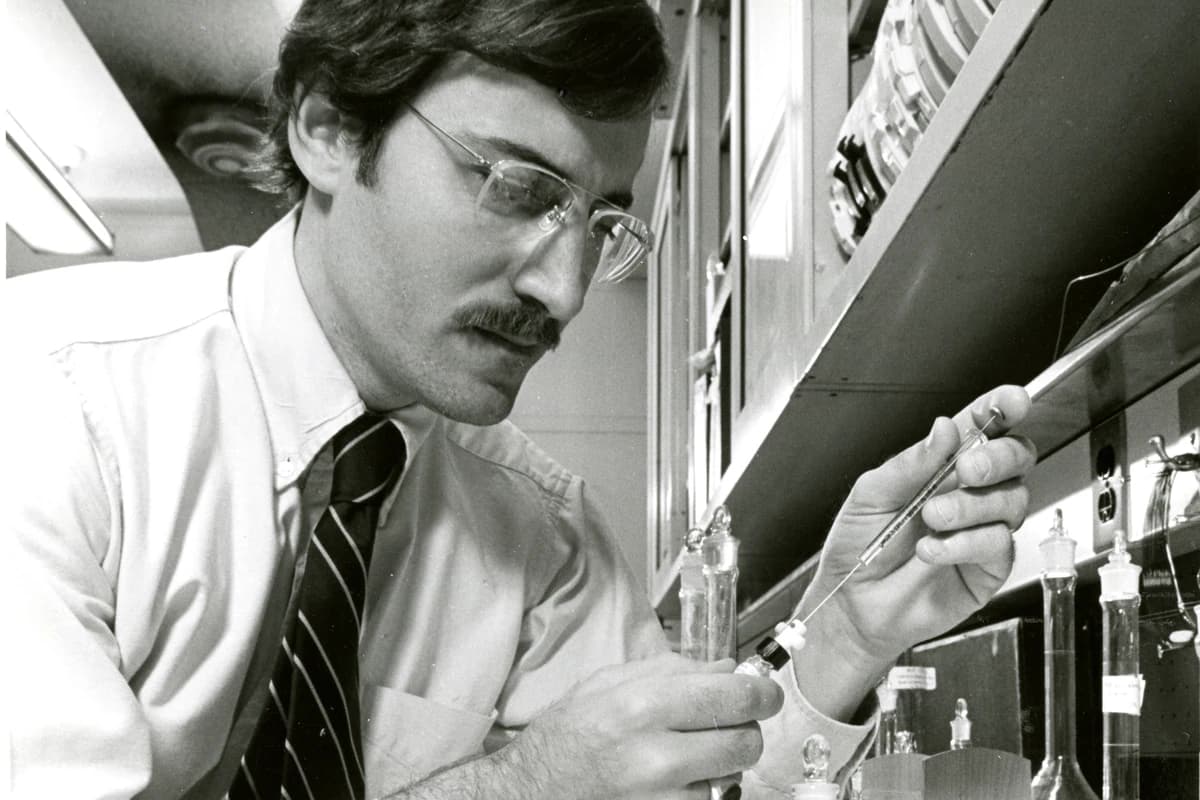
Research chemist Laurence Hilpert prepares a sample for analysis by gas chromatography and mass spectrometry at NIST.
Credit National Institute of Standards and Technology · Public domain · Cropped and converted to WebP


Joining two parts of a peptide can form a ring. In a lasso, the remaining tail passes through that ring. This interlock gives the finished molecule a shape that a drawing of the amino acid sequence alone cannot convey.
Andrew Roberts and Jessica Swanson examine evidence for a binding pocket shared by enzymes that form these lassos. Predictions about how a precursor sits in the pocket helped researchers explain why different enzymes accept particular peptides. It is a way to connect the shape of the finished lasso with the recognition event that precedes it.