News & Views · Nature Reviews Chemistry
How many shapes can a peptide chemist explore?
A year-end perspective asks how chemists can expand the kinds of structures and interactions available to peptides.
Source published
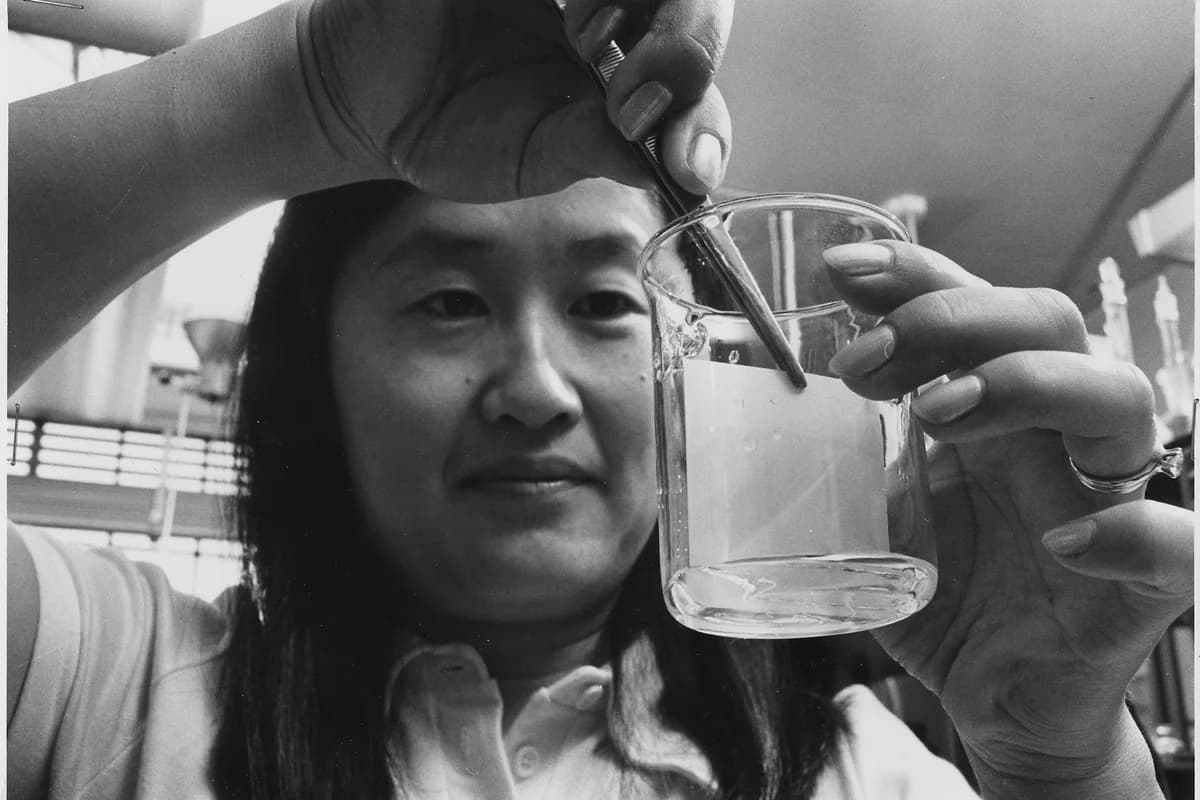
In Berkeley in 1976, chemist Ellen Lew used thin-layer chromatography to identify amino acids in a peptide.
Credit U.S. Department of Agriculture, via the U.S. National Archives · Public domain · Cropped and converted to WebP

Changing one residue at a time can yield a large family of related peptides. Closing the backbone into a ring or introducing a group capable of forming a covalent bond opens different questions about shape, binding and function.
This perspective brings those chemical choices into conversation with modelling and AI-guided design. A revealing way to judge a new series is to ask which molecular interactions it lets researchers test for the first time.