Research Highlights · Nature Catalysis
Inside a droplet, a peptide becomes a better catalyst
When a short peptide gathered into liquid droplets, it adopted a more stable fold and became more efficient at breaking a phosphate ester bond.
Source published
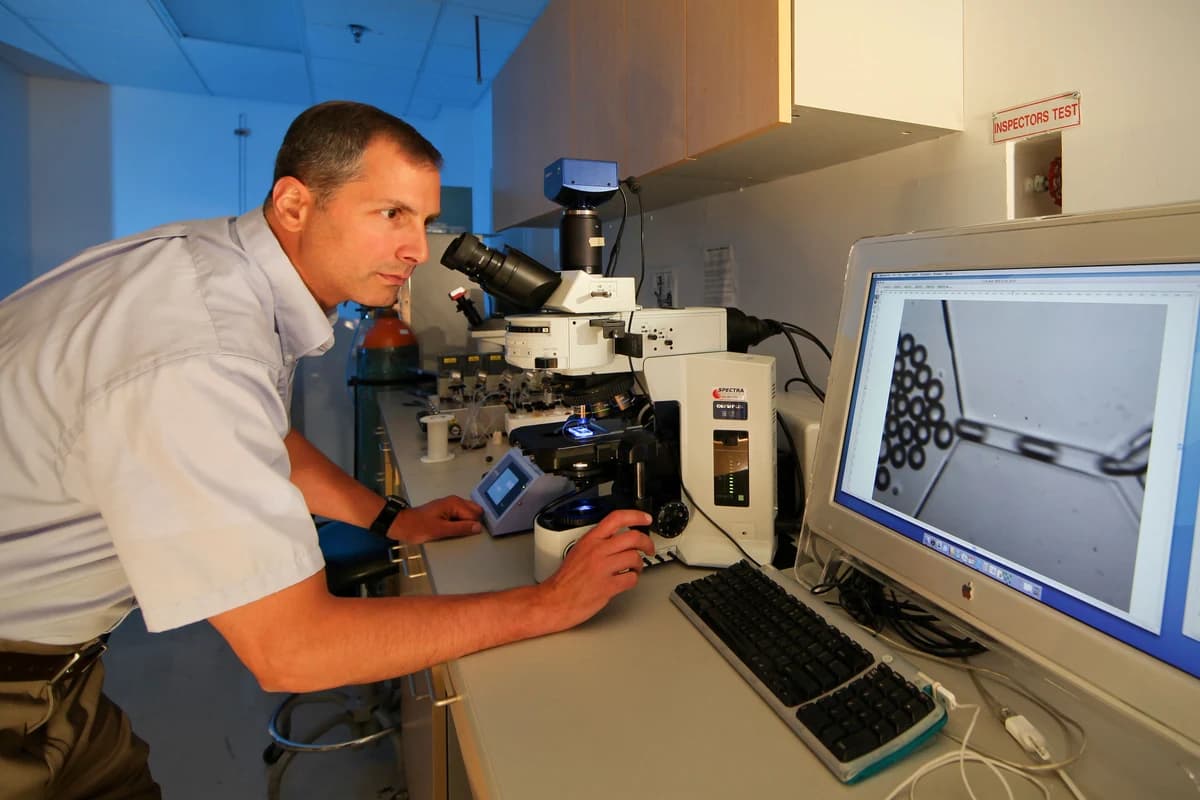
An Oak Ridge researcher watches droplets form in a microfluidic channel.
Credit Oak Ridge National Laboratory · CC BY 2.0 · Cropped and converted to WebP


A liquid mixture can separate into droplets that concentrate some molecules and leave others in the surrounding solution. In the experiment highlighted by Nature Catalysis, the peptide itself formed these droplets. Spectroscopy indicated that a loosely folded chain in solution took on a more defined hairpin shape inside them.
The droplets also favoured certain guest molecules. Both effects offer clues to the faster reaction. The catalyst had adopted a different shape, and the droplet had changed its local chemical surroundings. Studying a peptide in dilute solution alone would have missed both effects.