Research Highlights · Nature Catalysis
A bacterial peptide acquires a nucleobase-like ring
Researchers found that a bacterium can remodel part of a peptide into a structure resembling uracil, one of the bases found in RNA.
Source published
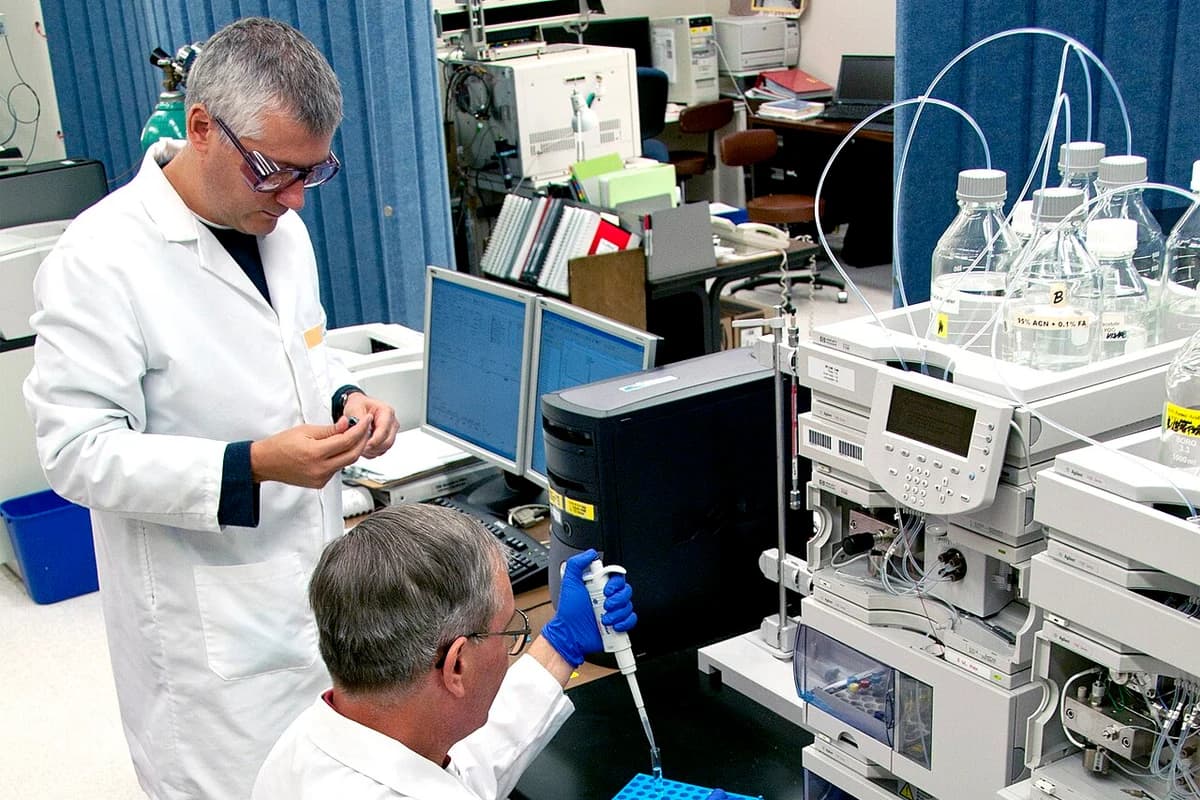
Researchers Gonçalo Gamboa da Costa and Tom Heinze at work in the National Center for Toxicological Research mass spectrometry laboratory.
Credit Michael J. Ermarth / US Food and Drug Administration · Public domain · Cropped and converted to WebP


A small change in a peptide’s mass told researchers that enzymes had altered the molecule. The obvious explanation turned out to be wrong. Looking more closely at its structure revealed a six-membered ring derived from an asparagine residue in the original chain.
The ring resembles a nucleobase, giving the finished natural product features usually associated with two different classes of biomolecule. The Nature Catalysis highlight follows the evidence for this unexpected chemistry. What the hybrid does for the bacterium that produces it remains unknown.