News & Views · Nature Sustainability
Where the solvent goes in peptide manufacturing
An engineering perspective on water-based peptide synthesis puts the repeated washing of a growing chain in focus.
Source published
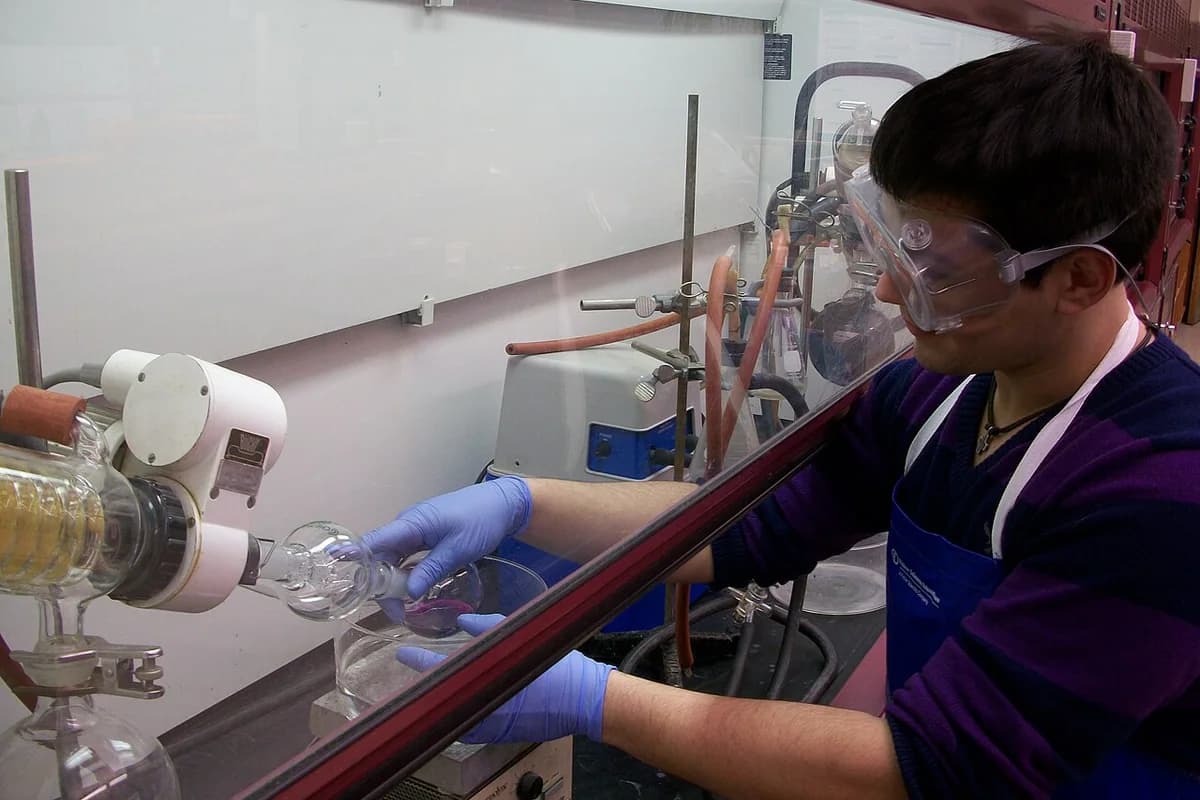
A researcher fits a flask to a rotary evaporator, an instrument used to remove solvent.
Credit Walkerma · CC BY-SA 3.0 · Cropped and converted to WebP


A finished peptide accounts for only a small part of the material used to make it. In solid-phase synthesis, the chain stays attached to a support while successive rounds of coupling and washing carry liquid through the process.
A Nature Sustainability commentary considers what a shift to water could mean for that material footprint. Comparing routes requires counting the wash volumes, the other reagents and the waste they generate across an entire synthesis.