Research Highlights · Nature Neuroscience
The neighbours that help tune alertness
In mice, nearby groups of inhibitory neurons responded differently to stimuli around a brainstem centre for arousal.
Source published
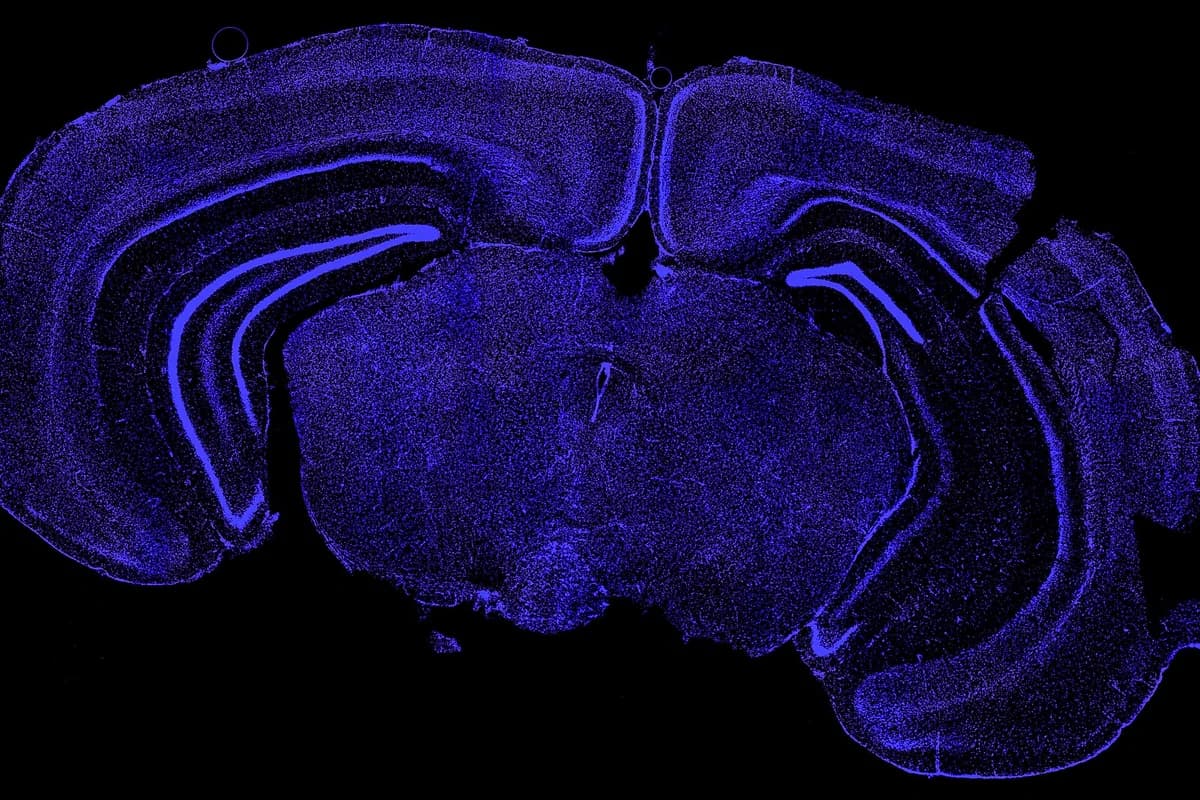
Fluorescent DAPI staining highlights cell nuclei across a coronal section of a mouse brain.


The locus coeruleus is a small cluster of brainstem neurons that releases noradrenaline. Neighbouring cells can inhibit this cluster through the neurotransmitter GABA. Researchers distinguished groups of those neighbouring cells by the neuropeptides they expressed.
The groups responded differently to stimuli and showed different relationships with arousal, exploration and avoidance in mice. That distinction helps explain why a measurement across the entire neighbourhood can hide differences between its cells.