News & Views · Nature Chemistry
Timing a protein contact one residue at a time
A Nature Chemistry briefing follows the return of molecular interactions as phenylalanine is uncovered.
Source published
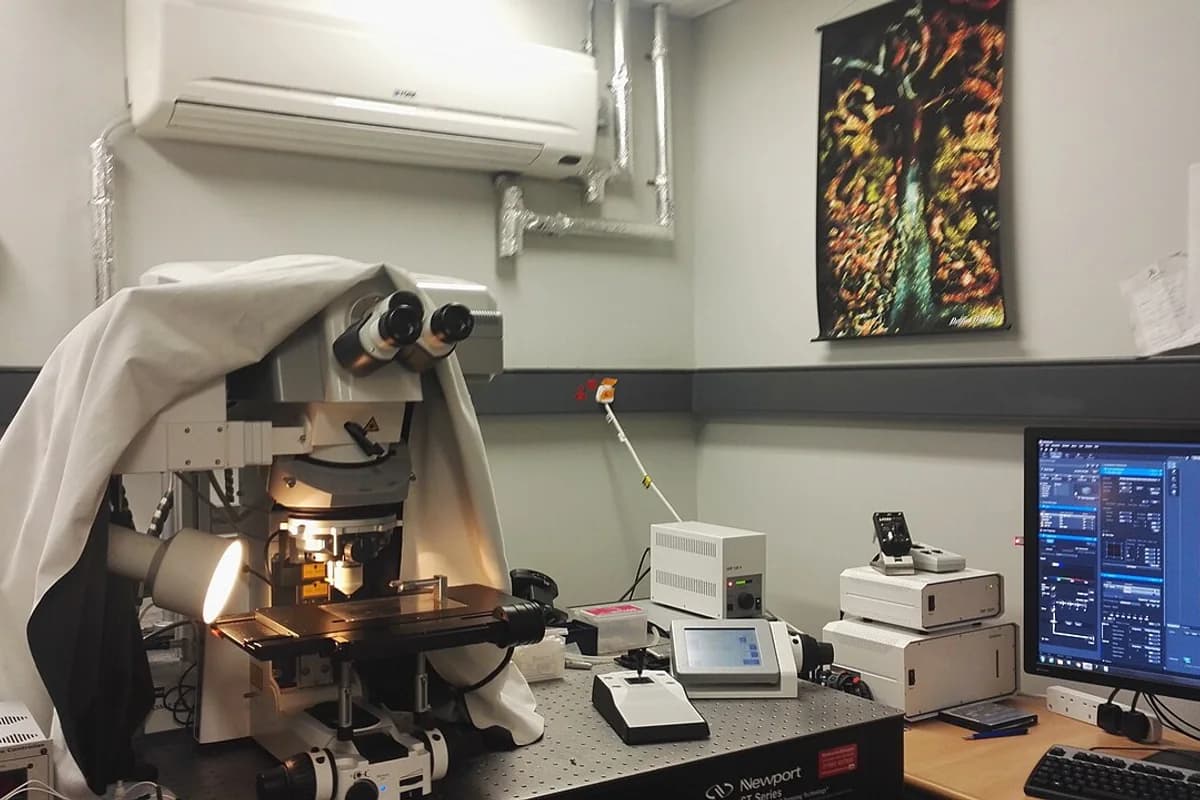
A confocal imaging workstation used to observe living tissue.
Credit Aleanora · CC BY-SA 4.0 · Cropped and converted to WebP


A ring of six carbon atoms helps phenylalanine make contact with neighbouring molecules. When that ring sits at the point where two proteins meet, a small change to its surface can affect how the partners recognise one another.
The briefing discusses work that temporarily alters the ring and then restores it. The timing is what makes the result interesting for cell biology. Researchers can observe what happens when the original contact becomes possible inside a cell or at its surface.