Research Highlights · Nature Chemical Biology
Looking for hidden hormones in larger proteins
A computational survey of human proteins led researchers to a small peptide involved in feeding behaviour in mice.
Source published
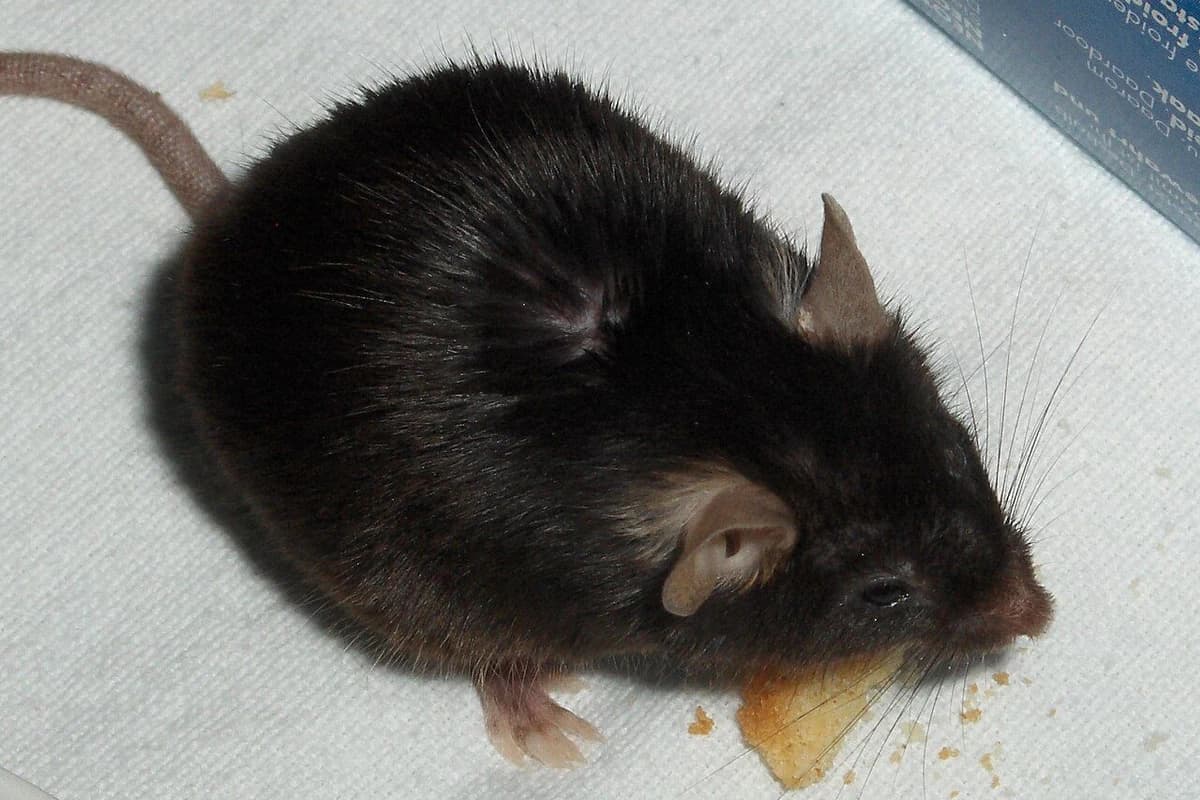
A C57BL/6 laboratory mouse eats a crumb.
Credit Wualex · Public domain · Cropped and converted to WebP


Cells produce some hormones by cutting short chains from a larger protein. That means a catalogue of full-length proteins can contain potential signalling molecules that have never been studied in their smaller form.
In Nature Chemical Biology, Gene Chong describes how a team searched for these overlooked fragments. One candidate, BRP, came from a protein called BRINP2 and reduced food intake in mouse experiments. The study connects a prediction about protein processing to an observation in an animal.