Research Highlights · Nature Reviews Chemistry
Which peptides still bind after a change of shape?
A reshaped peptide library provides a way to ask which early discoveries can tolerate further chemical development.
Source published
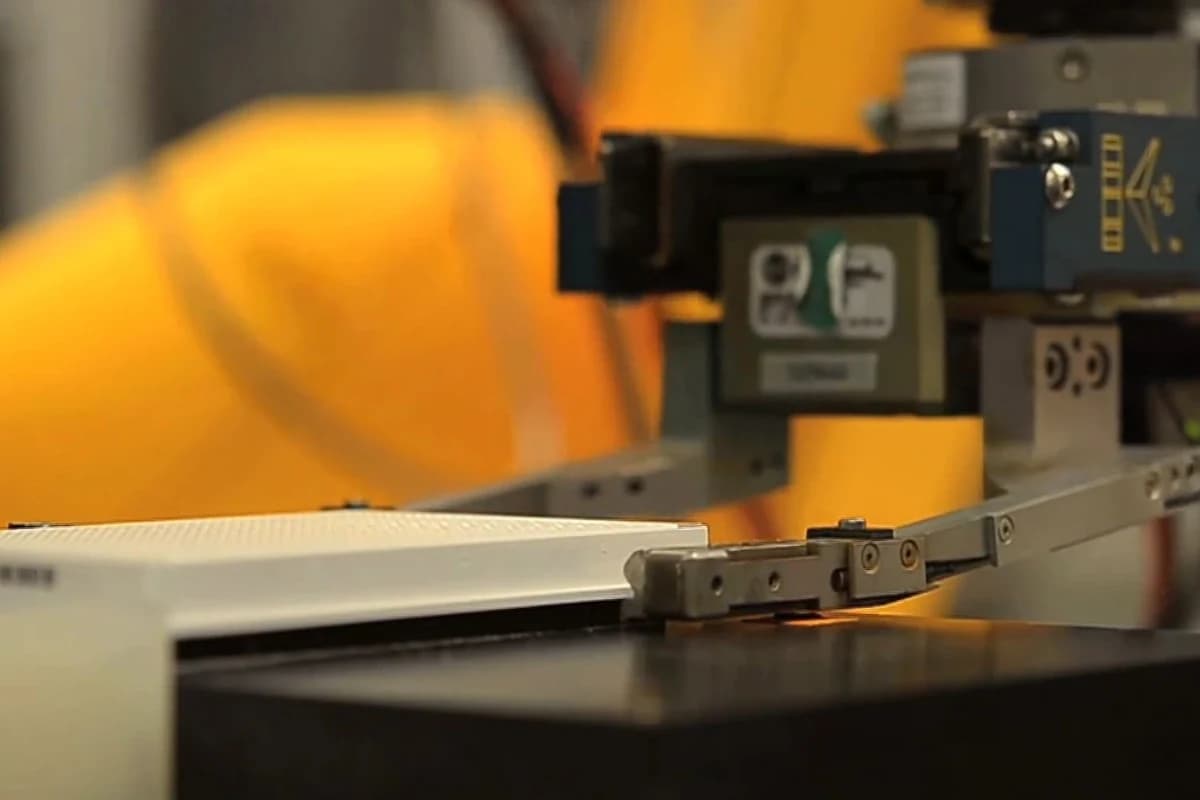
A robotic arm moves an assay plate during high-throughput screening. Each well can hold a separate test.
Credit Courtesy of the National Institute of Allergy and Infectious Diseases · Public domain · Cropped and converted to WebP


A peptide may bind its target in an initial screen, then lose that ability when its shape changes. This can leave researchers with an awkward choice: pursue the original molecule or begin again with a differently constructed library.
Writing in Nature Reviews Chemistry, Guoqing Jin considers work in which researchers revisited existing peptides after adding ring constraints. Some retained their binding ability. Comparing the original and reshaped molecules reveals which starting points offer room for further changes.