News & Views · Nature Materials
When antimicrobial peptides work as assemblies
A study of machine-selected peptides brings the structures they form together into the picture of antibacterial activity.
Source published
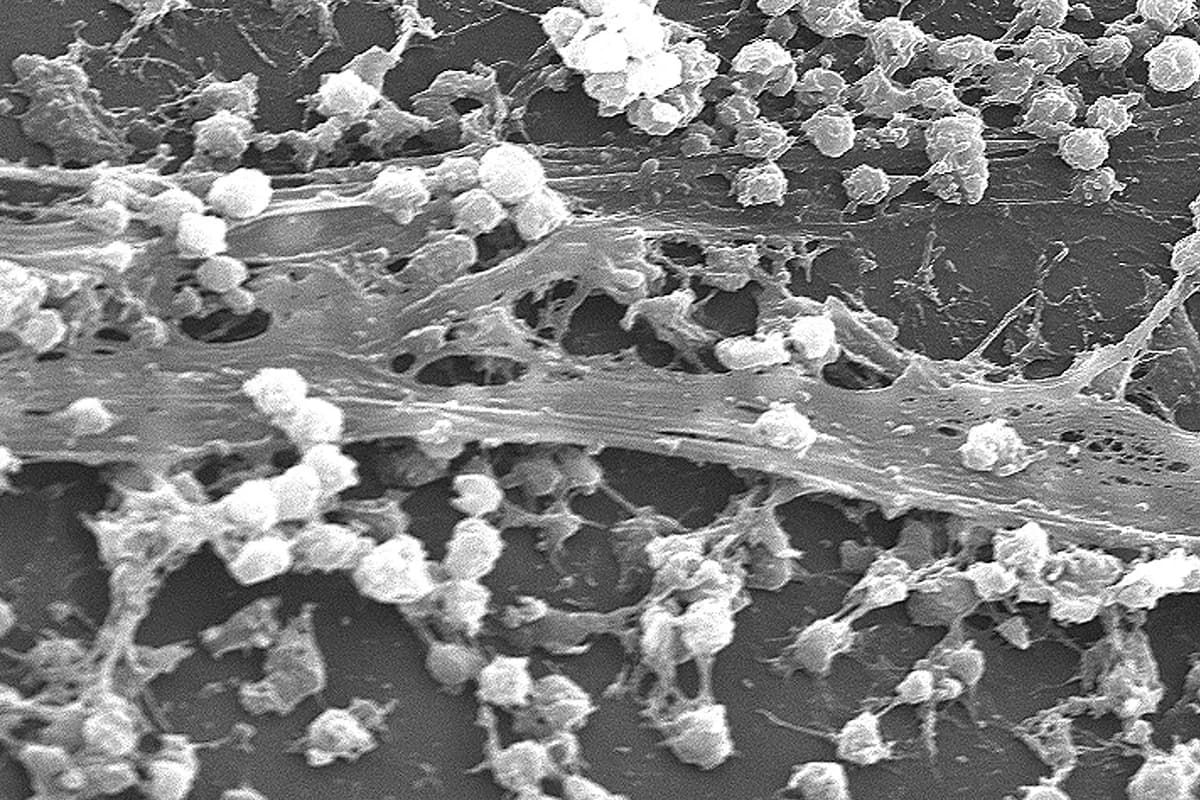
A scanning electron micrograph shows a Staphylococcus aureus biofilm on the surface of a catheter.
Credit Rodney M. Donlan and Janice Carr, CDC · Public domain · Cropped and converted to WebP


Individual peptide molecules can associate into larger structures. A Nature Materials commentary examines research that used deep learning to identify antimicrobial candidates with this capacity for self-assembly.
The work included tests against drug-resistant bacteria and biofilms, alongside a mouse model of intestinal infection. Those preclinical settings address different questions, from activity within an organised bacterial community to behaviour inside a living host.