Research Highlights · Nature Catalysis
A three-amino-acid guide to closing a molecular ring
A tiny peptide catalyst can influence the three-dimensional arrangement that forms when a large molecular ring closes.
Source published
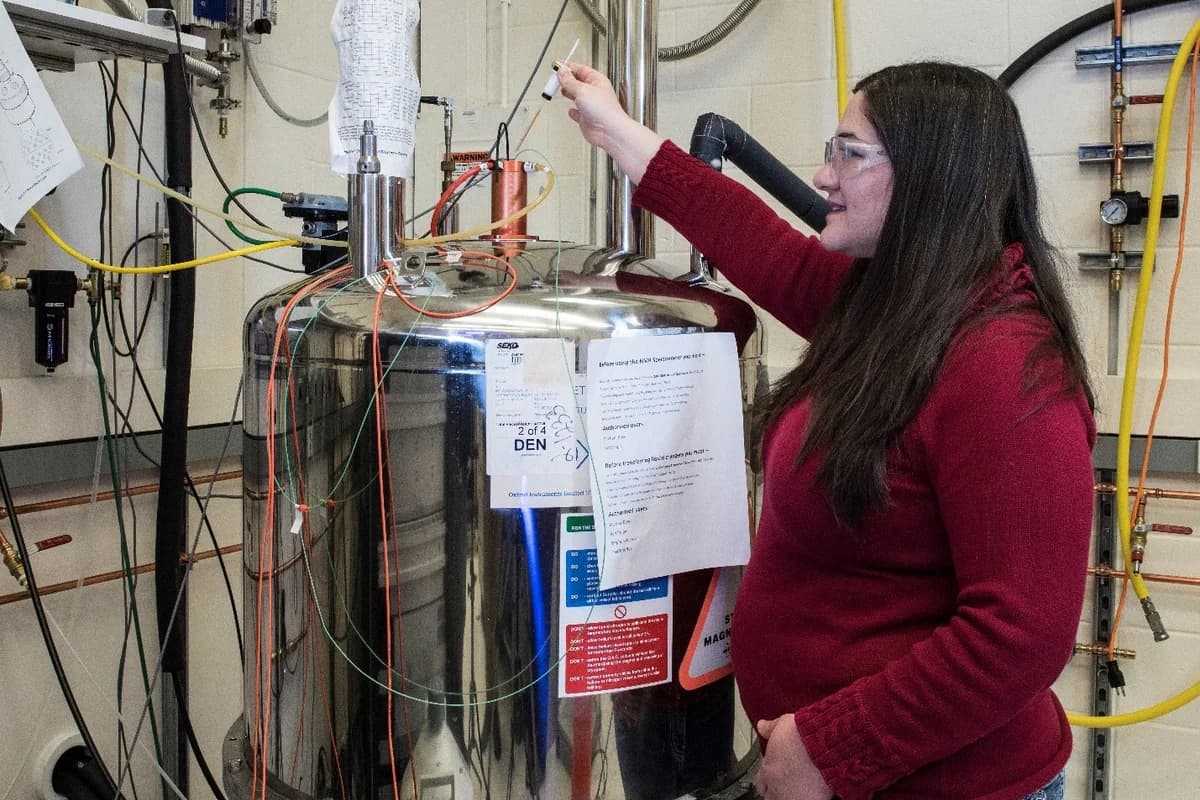
A researcher prepares a capillary sample for nuclear magnetic resonance at NIST.
Credit National Institute of Standards and Technology · NIST public information · Cropped and converted to WebP

Joining the ends of a flexible molecule poses two problems. The ends need to find each other before they meet another chain, and the way they approach helps determine the shape of the product.
A catalyst built from three amino acids helped favour one spatial arrangement during ring closure. The result illustrates how a small peptide can steer a much larger molecule by influencing the shape it adopts before a bond forms.