Research Highlights · Nature Synthesis
What it takes to assemble a peptide in water
A study tackles two obstacles to water-based peptide synthesis, the solubility of its building blocks and the material that holds the growing chain.
Source published
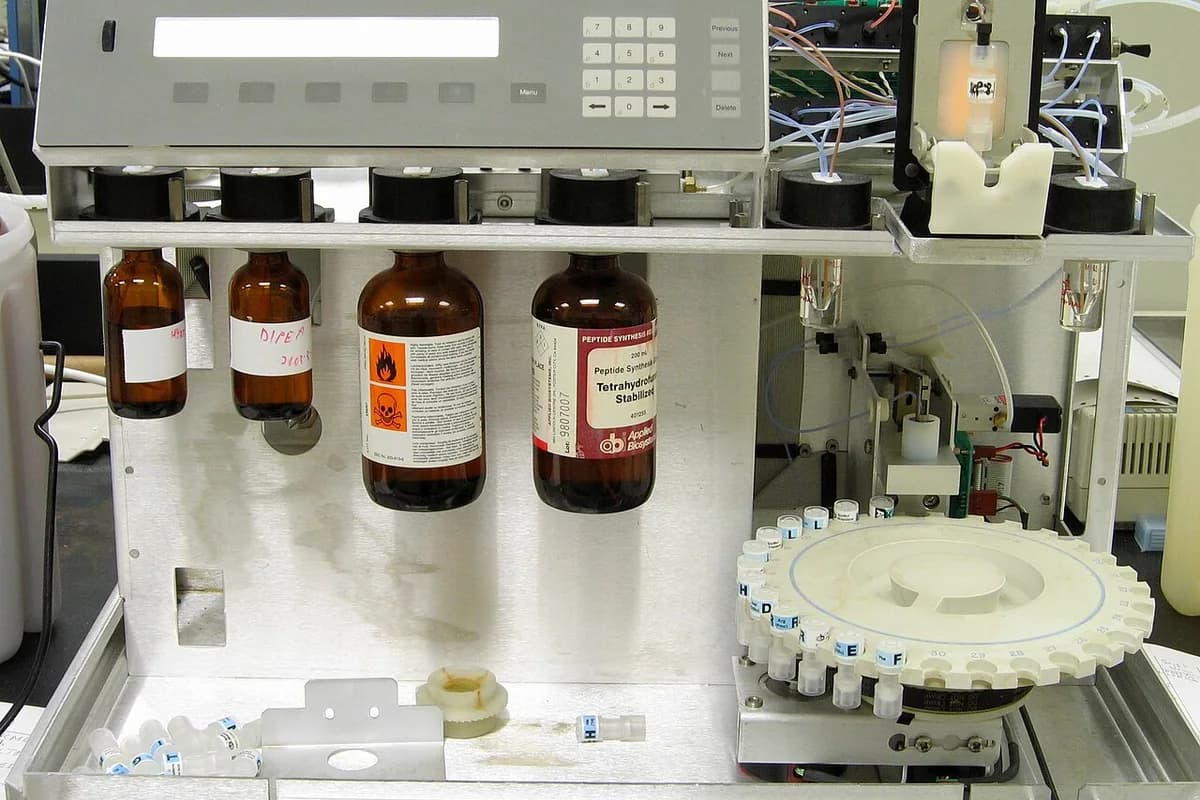
Reagent bottles and a sample carousel in an ABI Synergy peptide synthesiser.
Credit Michael Pereckas · CC BY-SA 2.0 · Cropped and converted to WebP


A peptide can dissolve readily in water even when the protected amino acids used to make it do not. Researchers showed that all 20 conventional protected amino acid building blocks could be brought into aqueous solution.
The team also used a water-compatible, biodegradable support made from polylysine. Solving both problems matters because a dissolved building block still needs to reach the growing peptide attached to the support.