News & Views · Nature Chemical Biology
Where mTORC1 acts inside a cell
Switching off mTORC1 in one compartment at a time gives researchers a closer look at what the signal does there.
Source published
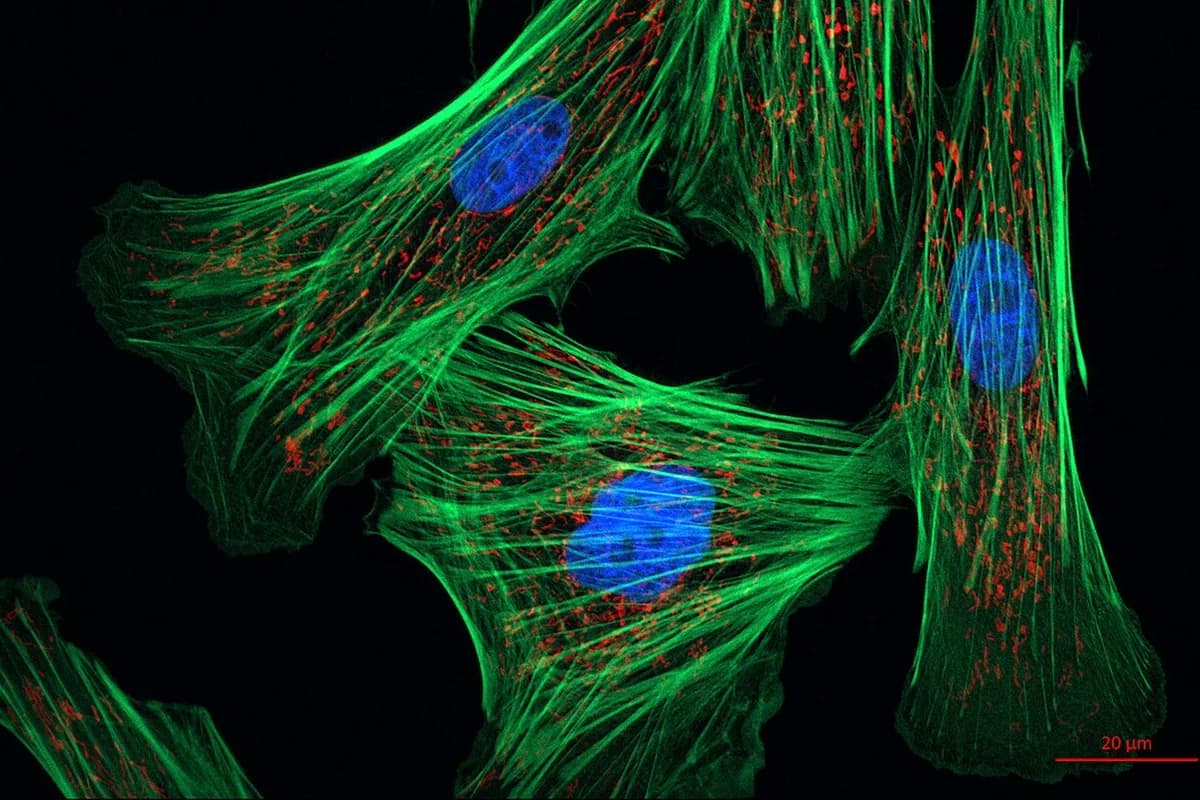
Different fluorescent stains reveal the nuclei, actin and mitochondria in cultured muntjac fibroblasts.
Credit ZEISS Microscopy. Sample courtesy of Michael W. Davidson, Florida State University · CC BY 2.0 · Cropped and converted to WebP


The same signalling complex can turn up in several parts of a cell. Switch it off everywhere and the effects become difficult to untangle. Researchers used a short fragment of the protein PRAS40 to inhibit mTORC1 in selected compartments.
The work links mTORC1 in the nucleus to changes in gene regulation. For researchers interpreting a whole-cell measurement, that raises a practical question. How much of the signal comes from the particular part of the cell they want to understand?